How to Value an E-commerce Business: A 5-Step Guide
In today’s digital age, e-commerce businesses are popping up left and right, and for good reason! With the convenience of online shopping and the potential for massive reach, it’s no wonder that entrepreneurs are eager to dive into this thriving market. But what happens when you want to sell your e-commerce venture or simply want to understand its worth? Valuing an e-commerce business can seem like a daunting task, especially with so many factors to consider.
Don’t worry—you’re not alone! Whether you’re thinking about selling, seeking investment, or simply wanting to keep track of your business’s growth, knowing how to accurately assess its value is crucial. Luckily, we’ve crafted a straightforward 5-step guide to help you navigate this process with confidence. By the end of this article, you’ll have the tools you need to determine your e-commerce business’s worth, allowing you to make informed decisions that can maximize your profits and secure your future. So, let’s jump in and discover how to unlock the true value of your online empire!
Understanding the Importance of Valuing Your E-commerce Business
Valuing your e-commerce business is not just a financial exercise; it’s a critical component of strategic planning that can significantly impact your success. Understanding the importance of this valuation can empower you to make informed decisions, whether you’re looking to attract investors, planning for growth, or simply gauging your market position.
Firstly, knowing the value of your online business allows you to set realistic financial goals. Without a clear understanding of your worth, you might undervalue your potential or overestimate your current standing, leading to misguided strategies. Establishing a solid valuation helps you identify growth opportunities and areas needing improvement.
Moreover, a well-defined valuation can enhance your credibility in the eyes of stakeholders. Investors and partners are more likely to engage with businesses that demonstrate an understanding of their value. By presenting a clear valuation, you can show that you’re not just another online store, but a serious contender in your market. This credibility can open doors to new partnerships and funding opportunities.
In addition, understanding your e-commerce business’s value can aid in making effective pricing strategies. By knowing how your business stacks up against competitors, you can adjust your pricing models to reflect both your value and the market demand. A well-priced product not only boosts sales but also enhances customer perception of your brand.
Another key aspect to consider is the potential for exit strategies. Whether you plan to sell your business in the near future or just want to keep your options open, having a clear valuation can guide your planning. It allows you to understand what buyers might be willing to pay and what improvements you could make to increase that value before selling. This foresight can dramatically enhance your negotiation position.
Lastly, valuing your business fosters a culture of accountability within your organization. When you set clear value metrics, your team becomes more focused on achieving performance benchmarks that directly impact the company’s worth. This shared understanding aligns everyone toward common goals, driving both individual and collective performance.
the importance of valuing your e-commerce business extends far beyond a mere number. It influences your strategic decisions, enhances your market credibility, informs your pricing strategies, prepares you for potential sales, and promotes a culture of accountability within your team. Investing the time and resources into understanding your business’s true value can yield significant returns, making it a critical undertaking for any serious e-commerce entrepreneur.
Key Metrics Every E-commerce Owner Should Track
Understanding the key metrics that drive your e-commerce business is crucial for making informed decisions and ensuring sustainable growth. By closely monitoring these metrics, you can optimize your strategies, enhance customer satisfaction, and ultimately increase your bottom line.
One of the most significant metrics to track is Conversion Rate. This percentage reflects the number of visitors who complete a desired action, such as making a purchase. A low conversion rate may indicate issues with your website’s design or user experience, while a high rate signifies effective marketing and customer engagement. To improve this metric, consider A/B testing different landing pages or promotional offers.
Average Order Value (AOV) is another essential metric. This figure tells you how much customers spend on average during a single transaction. Increasing your AOV means boosting your revenue without needing to attract more visitors. Strategies to enhance AOV include offering bundled products, upselling related items, and providing discounts on larger purchases.
Don’t overlook the importance of Customer Acquisition Cost (CAC). This metric measures how much you spend to acquire a new customer, encompassing all your marketing and advertising expenses. Keeping your CAC low is crucial for profitability. To do this, you might want to focus on organic search optimization, social media marketing, and referral programs, which can often yield lower acquisition costs compared to paid advertising.
Customer Lifetime Value (CLV) is equally important, as it estimates the total revenue you can expect from a customer throughout their relationship with your brand. Understanding your CLV helps you make better decisions regarding how much to invest in customer acquisition. Increasing CLV can be achieved through loyalty programs, personalized marketing, and excellent customer service.
Another metric worth tracking is your Cart Abandonment Rate. This metric indicates the percentage of shoppers who add items to their cart but leave without completing the purchase. High rates can be a red flag, suggesting possible issues with your checkout process. To reduce this rate, consider sending reminder emails, simplifying the checkout process, or offering incentives like free shipping.
Lastly, you should keep an eye on your Return on Advertising Spend (ROAS). This metric reveals how efficiently your advertising dollars are being spent and whether they are generating a positive return. A strong ROAS means your marketing strategies are effective, while a low ROAS may necessitate a reevaluation of your campaigns.
By consistently monitoring these key metrics, you can make data-driven decisions that enhance your e-commerce operation. Remember, the insights you gain from tracking these figures not only help in evaluating your current performance but also in planning for future growth and success.
Decoding Revenue: Beyond Just Sales Figures
When it comes to valuing an e-commerce business, the first step is to look beyond the surface-level sales figures. It’s crucial to understand that revenue is just one piece of a much larger puzzle. A comprehensive valuation considers various factors that can significantly impact the business’s overall worth. Here are some key elements to keep in mind:
Customer Lifetime Value (CLV): Knowing how much your customers are worth over their entire relationship with your brand can provide invaluable insight into future revenue potentials.
Profit Margins: Delving into profit margins gives a clearer picture of how efficiently a business operates. High sales figures with low margins can be misleading.
Traffic Sources: Understanding where your customers come from—whether through organic search, paid ads, or social media—can reveal the sustainability of sales figures.
Customer Acquisition Cost (CAC): Evaluating how much it costs to acquire a new customer is essential. A business with a low CAC is often more attractive to potential buyers.
Building a holistic view of these factors can help in understanding the stability and sustainability of revenue streams. It’s not just about how much product is sold, but how well the entire system supports ongoing growth and profitability. For instance, a brand that successfully cultivates a loyal customer base will likely have better long-term revenue stability than one that relies heavily on seasonal promotions or discounts.
Another critical aspect to consider is inventory management. A well-managed inventory reduces holding costs and ensures that products are available when customers demand them. Here’s how inventory health can affect valuation:
Inventory Health
Impact on Valuation
High Turnover Rate
Indicates strong demand and effective sales strategies.
Excess Stock
Can lead to increased holding costs and potential write-offs.
Out-of-Stock Items
May result in lost sales and diminished customer trust.
A deep dive into your e-commerce metrics helps in identifying areas for improvement, leading to enhanced operational efficiency. Additionally, assessing the brand’s potential for scalability is vital. Buyers are often looking for businesses that can grow without a linear increase in costs. Factors like technology stack, fulfillment processes, and marketing strategies play a crucial role in this aspect.
don’t overlook the importance of intellectual property and market positioning. A strong brand, unique product offerings, or proprietary technology can significantly contribute to a higher valuation, reflecting the true potential of the business beyond mere numbers. a thorough evaluation brings stakeholders closer to a realistic and beneficial valuation of an e-commerce business.
Evaluating Your Customer Base: The Heart of Your Business
When it comes to understanding the worth of your e-commerce business, evaluating your customer base is essential. Your customers are not just numbers on a spreadsheet; they are the lifeblood of your operations. A deep dive into their profiles, behaviors, and purchasing patterns can shed light on the true value of your business.
Start by categorizing your customers. Consider segments like:
Demographics: Age, gender, location, income level.
Buying Behavior: Frequency of purchases, average order value, product preferences.
Once you’ve categorized your customers, analyze the lifetime value (LTV) of different segments. This metric helps you understand how much revenue you can expect from a customer over the entirety of their relationship with your business. A higher LTV suggests a more valuable customer base, making your e-commerce business more attractive to potential investors or buyers.
To calculate LTV, use the simple formula:
Metric
Calculation
Average Purchase Value
Total Revenue / Number of Orders
Average Purchase Frequency
Total Orders / Unique Customers
Customer Lifespan
Average Years a Customer Stays Active
LTV
Average Purchase Value x Average Purchase Frequency x Customer Lifespan
Another critical aspect is customer engagement. Analyze your communication channels—whether it’s email newsletters, social media, or in-app notifications—and their effectiveness in retaining customers. Engagement metrics such as open rates, click-through rates, and customer feedback can provide insights into how well you connect with your audience.
Furthermore, leverage tools like customer surveys and feedback forms to gather qualitative insights. Understanding customer sentiment can reveal what they value most about your products or services and identify areas for improvement. Happy customers often lead to referrals, which can significantly increase your customer base and, in turn, the value of your business.
Lastly, consider the competitive landscape. Research your competitors to understand their customer acquisition strategies and retention efforts. Knowing where you stand in comparison can help you make informed decisions about your marketing strategies and customer engagement practices. This competitive insight is invaluable for building a robust, loyal customer base, ultimately enhancing your business’s marketability.
Assessing Your Brands Online Presence and Reputation
To accurately value an e-commerce business, it’s crucial to start by assessing its online presence and reputation. This not only reflects how customers perceive your brand but also significantly impacts your overall valuation. A positive online presence can be a major selling point, while a poor reputation can diminish your business’s worth.
Here are several key areas to examine:
Website Performance: Analyze metrics such as loading speed, mobile responsiveness, and user experience. A well-optimized website can enhance customer satisfaction and drive sales.
SEO Rankings: Check how your website ranks for relevant keywords. High rankings indicate strong brand visibility, which is attractive to potential buyers.
Social Media Engagement: Look at your following, likes, comments, and shares. An active and engaged audience can enhance brand loyalty and provide leverage in negotiations.
Customer Reviews and Ratings: Monitor platforms like Google, Yelp, and Amazon. Positive reviews can bolster your reputation, while negative feedback might require addressing before a sale.
To effectively measure your reputation, consider creating a simple table summarizing your performance across various platforms:
Platform
Rating
Review Count
Last Review Date
Google
4.5
150
October 2023
Yelp
4.0
85
September 2023
Amazon
4.8
200
October 2023
In addition to quantitative metrics, qualitative factors play a significant role in your brand’s reputation. Conduct surveys or gather feedback to understand customer sentiment. Ask questions such as:
What do customers love about your products?
What improvements or changes would they suggest?
How likely are they to recommend your brand to others?
keep an eye on your competitors. Understanding their online presence can provide insights into market trends and customer expectations. Use tools like SEMrush or Ahrefs to analyze their website traffic, backlink profiles, and keyword strategies. This information can help you identify areas for improvement and potential growth.
By thoroughly evaluating these aspects, you’ll not only gain a clearer understanding of your e-commerce business’s value but also develop actionable strategies to enhance your brand’s online presence and reputation. This proactive approach can be a game-changer in maximizing your business’s valuation before a sale.
Analyzing Profit Margins: What You Need to Know
Understanding profit margins is vital when valuing an e-commerce business. Profit margins can reveal the overall health of a business and provide insights into how efficiently it operates. By analyzing these margins, potential buyers can gauge not only current profitability but also future growth potential.
There are several key profit margin metrics to consider:
Gross Profit Margin: This measures the revenue left after deducting the cost of goods sold (COGS). A higher gross profit margin indicates a more efficient production process.
Operating Profit Margin: This metric takes into account all operating expenses, offering a clearer picture of the overall operational efficiency.
Net Profit Margin: This is the final profit after all expenses, taxes, and interest have been deducted. It reflects the true profitability of the business.
To illustrate how these margins can impact your valuation, consider the following table:
Metric
Example Value (%)
Industry Standard (%)
Gross Profit Margin
50
40-60
Operating Profit Margin
30
15-25
Net Profit Margin
20
10-15
When examining these figures, it’s essential to compare them to industry benchmarks. If a business consistently outperforms its competitors in terms of profit margins, it may be a strong candidate for investment. Conversely, margins that lag behind industry standards can signal inefficiencies or potential risks.
Another important factor to consider is the trend of the profit margins over time. A business with improving margins indicates a positive trajectory, suggesting that management is effectively controlling costs or increasing pricing power. On the other hand, declining margins can be a red flag and warrant further investigation into operational challenges.
Lastly, understanding the components that affect profit margins is crucial. For instance, factors such as supply chain efficiency, customer acquisition costs, and pricing strategies can dramatically influence these margins. A savvy buyer will analyze these elements closely to assess how they contribute to the overall profitability of the business.
The Role of Inventory in Your Business Valuation
When it comes to determining the value of your e-commerce business, inventory plays a pivotal role. It’s not just a collection of products on your virtual shelves; it’s an integral asset that can significantly influence your business’s overall valuation. Understanding how to assess your inventory is crucial for setting a fair price and attracting potential buyers.
First, consider the type of inventory you hold. Different categories of products can yield varying values based on demand, seasonality, and market trends. For instance, high-demand electronics might appreciate over time, while seasonal items like holiday decorations may not hold their value as well. Assessing the nature of your inventory helps establish a baseline for its worth:
Current Market Value: Evaluate how similar products are priced in the marketplace.
Turnover Rate: Fast-moving inventory can be more valuable than slow-moving stock.
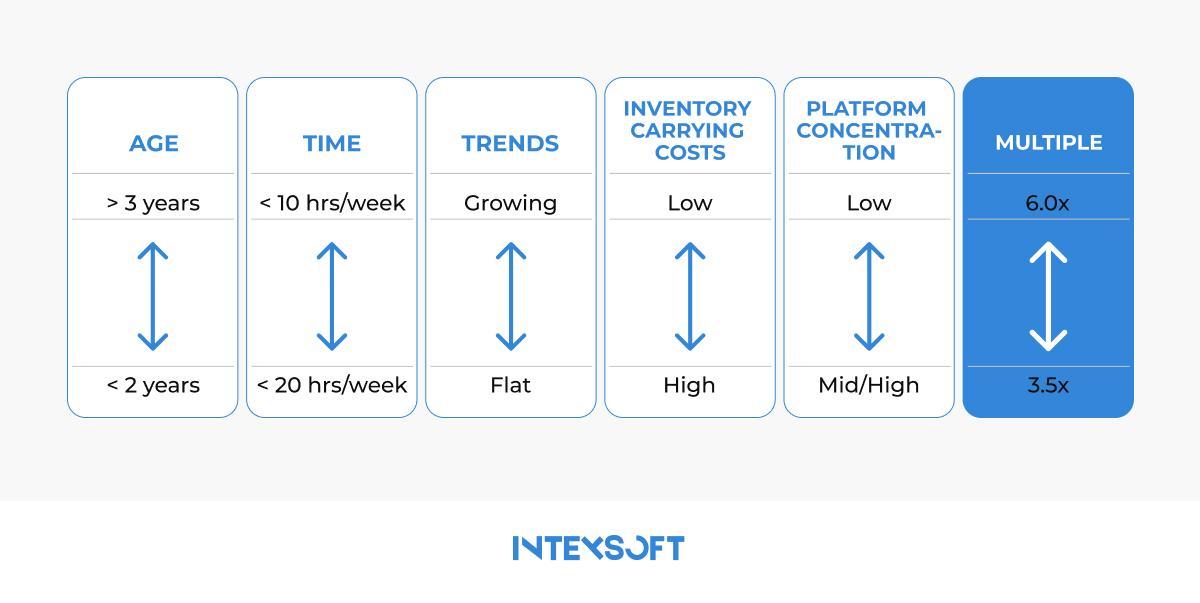
Next, evaluate your inventory carrying costs. These costs include storage, insurance, and depreciation. High carrying costs can erode inventory value, which can negatively impact your business valuation. Keeping these costs in check is essential to ensure that your inventory remains an asset rather than a liability.
Another important factor is your inventory management practices. Efficient inventory management systems not only reduce costs but also enhance customer satisfaction by ensuring that popular products are always in stock. A well-documented inventory system can provide potential buyers with an insight into how your business operates, making it more appealing. Consider including the following in your valuation report:
Inventory Turnover Ratio: Indicates how quickly inventory is sold and replaced.
Stock-Out Rates: Measures how often items are out of stock, affecting sales potential.
Lead Times: The time it takes to replenish inventory can impact cash flow and customer trust.
Don’t forget to factor in future inventory needs. If you are planning to expand your product line or increase stock levels, these factors should be included in your valuation. Buyers will want to know if there are opportunities for growth and how your inventory strategy aligns with those plans.
presenting your inventory data in a clear, structured format can enhance the credibility of your valuation. Consider using a table to summarize key inventory details, such as product categories, quantities, and estimated values:
Product Category
Quantity
Estimated Value
Electronics
150
$15,000
Apparel
300
$9,000
Home Goods
200
$5,000
as you navigate the waters of business valuation, remember that inventory is more than just stock; it’s a vital component that can lead to greater profitability and appeal to buyers. By accurately assessing its worth and presenting it effectively, you can enhance your business’s attractiveness and secure a better valuation.
When it comes to valuing an e-commerce business, understanding its future earnings potential is critical. Investors are not just looking at what the business is making today; they are keenly interested in what it can generate tomorrow. This forward-looking perspective helps gauge whether your e-commerce venture is a solid investment.
To start, consider analyzing the historical growth rates. Look at key performance indicators (KPIs) such as:
Revenue growth: How has your revenue changed over the past years?
Customer acquisition costs: Are you spending more or less to attract new customers?
Customer lifetime value: What is the projected value of a customer over their entire relationship with your business?
Next, delve into the market trends that could influence your growth trajectory. Research factors such as:
Market size: Is the niche you’re in expanding or contracting?
Competitor analysis: How are your competitors performing, and what strategies are they using?
Consumer behavior: Are there shifts in buying patterns that could affect your sales?
Another crucial element is the scalability of your business model. A scalable business can grow without a corresponding increase in costs. Assess whether your current operations can handle increased demand without significant investment in resources. Key questions include:
Are your systems automated?
Do you have reliable suppliers?
Can your platform handle more traffic?
To provide a clearer picture of your potential earnings, create a pro forma financial statement. This statement projects your expected revenue, expenses, and profit over the next three to five years. Consider including a table like the one below:
Year
Projected Revenue
Projected Expenses
Estimated Profit
Year 1
$500,000
$300,000
$200,000
Year 2
$750,000
$400,000
$350,000
Year 3
$1,000,000
$500,000
$500,000
Once you have these projections, consider applying a discounted cash flow (DCF) analysis. This method discounts future earnings back to their present value, helping you understand what today’s worth is. The formula is straightforward:
DCF = Future Cash Flow / (1 + r)^n
Here, r is the discount rate, and n is the number of years into the future you’re projecting. A lower discount rate indicates higher future cash flows, suggesting greater growth potential.
mapping out your future earnings potential isn’t merely a financial exercise; it’s a strategic imperative. By thoroughly understanding and presenting this data, you can instill confidence in investors and buyers alike, showcasing your e-commerce business as a viable investment opportunity.
Reviewing Your Operational Efficiency: Cost Management Insights
When it comes to evaluating the worth of your e-commerce business, understanding and managing operational efficiency is crucial. Cost management insights can dramatically influence your valuation, allowing you to pinpoint areas of strength and identify potential weaknesses. Here’s how to leverage cost management insights effectively.
Analyze Your Cost Structure
The first step in enhancing operational efficiency is to dissect your cost structure. Look closely at:
Fixed Costs: These are expenses that do not change with the volume of sales, such as rent and salaries.
Variable Costs: Costs that fluctuate with sales, like raw materials and shipping expenses.
Overhead Costs: Indirect costs necessary for running your business that can often be reduced.
By understanding where your money is going, you can make informed decisions that could lead to significant savings.
Outsourcing non-core activities to save on labor costs.
Utilizing technology and automation to streamline operations.
Each of these strategies can help improve your bottom line, enhancing the overall valuation of your business.
Monitor Key Performance Indicators (KPIs)
Tracking KPIs related to your operational efficiency is vital for ongoing cost management. Key metrics to monitor include:
Metric
Description
Gross Margin
Measures the difference between revenue and cost of goods sold.
Operating Margin
Reflects the percentage of revenue left after covering operating expenses.
Return on Investment (ROI)
Evaluates the profitability of investments.
Regularly measuring these KPIs keeps you informed about your business’s performance and helps you adjust your strategies as necessary.
Evaluate Inventory Management Tactics
Inventory management plays a pivotal role in your operational efficiency. Consider adopting practices like:
Just-In-Time (JIT): Reduces inventory costs by receiving goods only as needed.
ABC Analysis: Categorizes inventory based on importance and value.
Automated Inventory Systems: Uses technology to track stock levels and forecast demand.
Improving your inventory management can lead to reduced holding costs and less capital tied up in unsold stock.
Regularly Review Your Financial Statements
regularly reviewing your financial statements can provide deeper insights into your operational efficiency. Focus on:
Profit and Loss Statements: Understand where profit is coming from and where losses may occur.
Cash Flow Statements: Ensure liquidity and the ability to meet short-term obligations.
Balance Sheets: Evaluate your assets and liabilities to gauge your financial stability.
By keeping a finger on the financial pulse of your business, you can make proactive adjustments to enhance both efficiency and valuation.
The Impact of Market Trends on Your Business Value
Understanding how market trends influence your business value is essential for anyone looking to sell or expand their e-commerce venture. Market trends refer to the general direction in which a market is moving, influenced by factors such as consumer behavior, technology, and economic conditions. When evaluating your business, it’s crucial to consider how these trends can either enhance or diminish its worth.
Consumer Behavior: Today’s consumers are more informed and discerning than ever. They are increasingly drawn to brands that prioritize sustainability, convenience, and value. If your e-commerce business aligns with these consumer preferences, it can significantly boost your valuation. For example, businesses that offer eco-friendly products or utilize technology to enhance shopping experiences often see higher demand and, therefore, increased value.
Technological Advancements: The rapid pace of technological change can also impact your business’s value. E-commerce platforms that leverage AI for personalized shopping experiences or use data analytics to optimize inventory management are often viewed more favorably. Staying ahead of technological trends not only improves operational efficiency but also enhances the customer experience, leading to increased sales and a higher business valuation.
Economic Conditions: The broader economic environment plays a vital role in determining market trends. During periods of economic growth, consumer spending typically increases, which can lead to higher sales and profits for e-commerce businesses. Conversely, during economic downturns, discretionary spending often decreases, impacting sales negatively. Understanding these cycles can help you time your market entry or exit effectively, maximizing your business’s value.
Trend
Impact on Business Value
Consumer Preferences Shift
Increased demand for sustainable products can elevate brand value.
Technological Integration
Advanced tech can boost operational efficiency and consumer appeal.
Economic Fluctuations
Stronger economies can enhance sales; weaker ones can diminish value.
Competitive Landscape: Market trends also shape the competitive landscape. As new entrants emerge and existing competitors adapt, your business’s positioning becomes increasingly crucial. A well-defined niche or unique selling proposition can make your business more attractive to potential buyers or investors. Regularly analyzing competitors and adjusting your strategies in response to market changes can be a decisive factor in maintaining and enhancing your business’s value.
keeping your finger on the pulse of market trends is not merely a good practice; it’s a necessity for anyone looking to maximize their e-commerce business value. By understanding and adapting to consumer behaviors, technological advancements, and economic conditions, you can position your business for not just survival, but thriving success in an ever-evolving marketplace.
Gathering Key Financial Documents for an Accurate Valuation
Before embarking on the journey of valuing your e-commerce business, it’s crucial to gather a comprehensive set of financial documents. These documents are the building blocks for an accurate valuation, providing insight into your business’s performance and potential. Here’s a checklist of essential documents you’ll need:
Profit and Loss Statements: These statements provide a detailed account of your revenues, costs, and expenses over a specific period. Aim to gather at least the last three years’ worth.
Balance Sheets: A snapshot of your business’s assets, liabilities, and equity at a specific point in time. Having balance sheets from the last three years will help depict financial stability.
Cash Flow Statements: Understanding your cash inflows and outflows is vital. These statements reveal how well your business manages cash to fund its obligations and growth.
Tax Returns: Provide your tax returns for the last three years. This not only verifies revenue but also showcases your business’s compliance and financial health.
Sales Reports: Detailed reports on sales trends can highlight seasonality and customer preferences, valuable for understanding your market position.
Customer Acquisition Costs (CAC): Documenting how much it costs to gain a new customer is crucial for valuing your business’s growth potential.
Once you have gathered these documents, it’s essential to ensure their accuracy and consistency. This not only builds credibility but also provides an honest representation of your business’s financial status. In the eyes of potential buyers or investors, transparency can significantly influence their decision-making process.
Here’s a simple table that summarizes the financial documents you should gather:
Document Type
Purpose
Profit and Loss Statements
To assess profitability over time
Balance Sheets
To analyze financial stability
Cash Flow Statements
To evaluate cash management
Tax Returns
To verify revenue and compliance
Sales Reports
To identify market trends
Customer Acquisition Costs
To gauge growth potential
By meticulously compiling these documents, you will not only prepare yourself for a thorough valuation process but also instill confidence in potential buyers. Remember, an accurate valuation is grounded in solid financial evidence, making your e-commerce business more appealing in the marketplace.
Consulting with Professionals: When is it Necessary?
Valuing an e-commerce business can be a complex task, and while many entrepreneurs attempt to tackle this on their own, there are moments when consulting with professionals becomes not just beneficial, but essential. Understanding the nuances of valuation can mean the difference between a successful sale and a missed opportunity.
One of the key scenarios in which you should consider professional advice is when you are planning to sell your business. An experienced business broker or appraiser can provide you with a realistic valuation based on industry standards, recent sales data, and your specific business metrics. This expert insight can help you set a price that attracts buyers while maximizing your profit.
Another critical moment is during significant financial changes within your business. Whether you’re experiencing rapid growth, facing downturns, or considering major investments, a professional can help you reassess your valuation. They can take a deep dive into your financial records, analyze cash flow projections, and provide a comprehensive evaluation that reflects the current state of your business.
Don’t overlook the value of professional guidance when it comes to understanding the trends and benchmarks within your industry. E-commerce is fast-evolving, and staying ahead of the curve is crucial. Specialists in e-commerce valuation can offer insights into emerging market conditions, competitive analysis, and innovative strategies that may influence the worth of your business.
Additionally, if your e-commerce business has complex revenue streams—such as subscriptions, affiliate income, or digital products—consulting with a professional can clarify how these factors impact your overall valuation. These revenue models may require specific methodologies or adjustments that a seasoned expert is well-equipped to handle.
Lastly, if you simply find the valuation process overwhelming, reaching out for professional support can alleviate stress. Many entrepreneurs underestimate the time and effort required to accurately assess their business. With expert help, you can focus on running your business while ensuring you’re making informed decisions regarding its value.
When to Consult Professionals
Why It’s Important
Planning to Sell
Ensures accurate pricing and attracts buyers
Financial Changes
Provides reassessment based on current metrics
Industry Trends
Offers insights into market conditions and benchmarks
Complex Revenue Streams
Clarifies valuation methods for diverse income
Overwhelm
Reduces stress and allows focus on business operations
Making Sense of Your Valuation: How to Interpret the Numbers
Understanding the valuation of your e-commerce business is crucial for making informed decisions, whether you’re looking to sell, secure investments, or strategize for growth. It’s not just about crunching numbers; it’s about interpreting what those numbers mean for the future of your business.
At the heart of valuation lies a variety of financial metrics. Here are some key figures to focus on:
Revenue: This is the total income generated from sales. It’s often the first number potential buyers look at.
Net Profit: After deducting all expenses, how much profit does your business actually make? This figure can significantly impact perceived value.
Customer Acquisition Cost (CAC): Understanding how much it costs to acquire a customer can help gauge the effectiveness of your marketing strategies.
Lifetime Value (LTV): This metric indicates how much revenue a customer is expected to generate over their lifetime with your brand.
Once you have these metrics, it’s essential to analyze trends over time. A steady increase in revenue and profit margins can signal a healthy business, while stagnation or decline can raise red flags. For instance, consider creating a simple table to track your metrics over the last few years:
Year
Revenue
Net Profit
CAC
LTV
2021
$100,000
$20,000
$50
$200
2022
$150,000
$30,000
$40
$250
2023
$200,000
$50,000
$30
$300
Analyzing these numbers allows you to draw conclusions about the health of your business and its potential for growth. If your LTV is significantly higher than your CAC, that’s a strong indicator of a sustainable business model. Conversely, if your CAC is nearing or exceeding your LTV, it’s a cue to revisit your marketing strategy.
Moreover, consider external factors that may impact your valuation, such as market trends and economic conditions. For instance, if your niche is witnessing a surge in demand, this may enhance your business’s value. Staying updated on industry trends can give you an edge when discussing valuations with potential buyers or investors.
Lastly, don’t underestimate the qualitative aspects of your business. Brand reputation, customer loyalty, and market positioning can all play significant roles in valuation. A strong brand can command a higher price than what numbers alone might suggest. Make sure to communicate these attributes effectively when presenting your valuation.
Preparing for Sale: Presenting Your E-commerce Business Effectively
When it comes time to sell your e-commerce business, the first impression is crucial. Buyers want to envision the potential of what they are investing in, and how well you present your business can significantly influence their decision. Here are some effective strategies to ensure your e-commerce business looks its best:
Optimize Your Website: Ensure that your website is user-friendly, aesthetically pleasing, and fully functional. A clean design with intuitive navigation can enhance the user experience and reflect positively on your business’s value.
Showcase Your Brand: Highlight what makes your brand unique. Use consistent branding elements, such as logos, color schemes, and messaging throughout your site. This helps buyers see the branding potential that comes with your business.
Highlight Financial Performance: Buyers are keen on the numbers. Present your financial records clearly, with attention to revenue, profit margins, and growth trends. A well-organized financial summary can reassure potential buyers about the viability of their investment.
Consider creating a comprehensive information package for potential buyers. This package should include essential documents and data that paint a complete picture of your business. You might want to include:
Traffic statistics and customer demographics.
Marketing strategies that have proven successful.
Supplier agreements and inventory details.
Customer testimonials and case studies.
Another critical element is your inventory management. Ensure that all products are well-stocked, listed accurately, and organized efficiently. Potential buyers will appreciate a seamless transition, especially if they can take over operations without immediate changes.
Consider presenting your performance metrics in a clear and engaging format, such as the table below:
Metric
Current Value
Last Year Value
Monthly Revenue
$20,000
$15,000
Customer Acquisition Cost
$25
$30
Average Order Value
$75
$60
Lastly, don’t underestimate the power of customer engagement. Highlight any loyalty programs, email newsletters, or social media following that you have built. These elements represent a community that buyers can leverage, making your business even more appealing.
By presenting your e-commerce business effectively, you not only attract potential buyers but also set the stage for negotiations that reflect the true value of what you have built. Taking the time to prepare and showcase your business properly can significantly enhance its marketability and final sale price.
Frequently Asked Questions (FAQ)
Q&A: How to Value an E-commerce Business (5-Step Guide)
Q1: Why is it important to value an e-commerce business? A1: Great question! Valuing your e-commerce business is crucial for several reasons. Whether you’re looking to sell, attract investors, or even just want to understand your market position, knowing your business’s worth helps you make informed decisions. It gives you leverage in negotiations and can help you set realistic goals for growth.
Q2: What are the key factors to consider in the valuation process? A2: There are a few key factors that play a significant role in determining the value of your e-commerce business. First, consider your revenue and profit margins. Then, look at your customer base—how loyal are they? Don’t forget about your brand reputation and online presence. Lastly, assess your operational costs and growth potential. All these elements contribute to a comprehensive valuation.
Q3: Can you break down the 5-step guide for me? A3: Absolutely! Here’s a quick rundown:
Analyze Financial Statements: Start with three years of income statements, balance sheets, and cash flow statements. These show the financial health of your business.
Determine Your Revenue Streams: Identify how much money comes from different sources—product sales, recurring subscriptions, or affiliate marketing. This gives a clearer picture of sustainability.
Benchmark Against Competitors: Research similar e-commerce businesses to see how they’re valued. This provides context and helps you set expectations.
Choose a Valuation Method: There are several methods, like the income approach, market approach, or asset-based approach. Each has its strengths depending on your business model.
Consult a Professional: consider working with a valuation expert. They can provide insights and help you navigate the nuances of e-commerce valuation.
Q4: How can I improve my e-commerce business’s value before selling? A4: Fantastic question! There are several strategies you can employ. Focus on increasing your revenue by diversifying your product range or improving marketing efforts. Streamline operations to reduce costs, and invest in customer relationship management to enhance loyalty. A strong online presence and positive reviews also elevate your brand’s value. Remember, the more attractive your business looks to potential buyers, the higher the value!
Q5: What common mistakes should I avoid during the valuation process? A5: There are a few pitfalls to watch out for. First, don’t rely solely on gross revenue; profit margins matter more to buyers. Avoid emotional bias—your attachment to the business can cloud your judgment. Lastly, failing to prepare accurate financial documentation can lead to undervaluing or overvaluing your business. Stick to the facts, and you’ll be on the right track!
Q6: How long does the valuation process typically take? A6: The timeline can vary, but generally, you can expect the valuation process to take anywhere from a few weeks to a couple of months. It depends on the complexity of your business and how organized your financial records are. The more prepared you are, the smoother and quicker the process will be!
Q7: What’s the takeaway from this guide? A7: The key takeaway is that valuing your e-commerce business is not just a number-crunching exercise; it’s a strategic move that can open doors for growth and opportunity. By following our 5-step guide, you’ll not only understand your business’s worth but also position yourself for success—whether you’re looking to sell or just enhance your enterprise. Don’t underestimate the power of a solid valuation!
In Conclusion
As we wrap up our exploration of how to value an e-commerce business, it’s clear that having a solid grasp of this process is essential for anyone looking to buy, sell, or grow in the digital marketplace. Remember, valuing your business isn’t just about numbers; it’s about understanding your unique position in the market, the potential for growth, and the value you bring to your customers.
By following our five-step guide, you’re equipped to make informed decisions that can significantly impact your bottom line. Whether you’re preparing for a sale, seeking investment, or simply wanting to get a better handle on where you stand in the e-commerce landscape, this knowledge is your secret weapon.
So, take a moment to reflect on what you’ve learned. Dive into those financial statements, analyze your customer base, and don’t hesitate to reach out for professional advice if you need it. The right valuation can unlock new opportunities and set the stage for future success.
Lastly, remember that the e-commerce world is continuously evolving. Staying informed and adaptable is key. Keep learning, keep growing, and you’ll not only find value in your business but also create lasting impact in the industry. Happy valuing!